

You walk out of the interview feeling good. Strong answers. Good rapport. Nailed the closing question. Then what?
Most candidates assume the decision comes down to skills and experience. The best CV wins.
It doesn't work like that.
I've sat in on hundreds of post-interview debriefs with clients. Here's what actually happens once you leave.
The first thing they discuss isn't your answers
It's their gut feeling.
"What did you think?" Someone says it within ten seconds of the door closing. Before anyone checks notes or revisits your CV.
That initial reaction carries more weight than most hiring managers would admit. If three people in the room felt something was off — even if they can't articulate what — you're in trouble.
Then they compare you to the other candidates
Not against the job description. Against each other.
"She was sharper than the first guy." "His energy was better than anyone we've seen this week."
You're not being scored in isolation. You're being ranked.
What tips the balance between two strong candidates
The questions you asked.
Not your answers — your questions. The candidate who asked something that made the room pause and think almost always wins.
How you handled the question you didn't expect.
Polished answers are forgettable. Watching someone think on their feet? That sticks.
Whether you made it easy to say yes.
Did you address concerns before they raised them? Did you connect your experience to their problem? Or did they have to figure out how you'd fit?
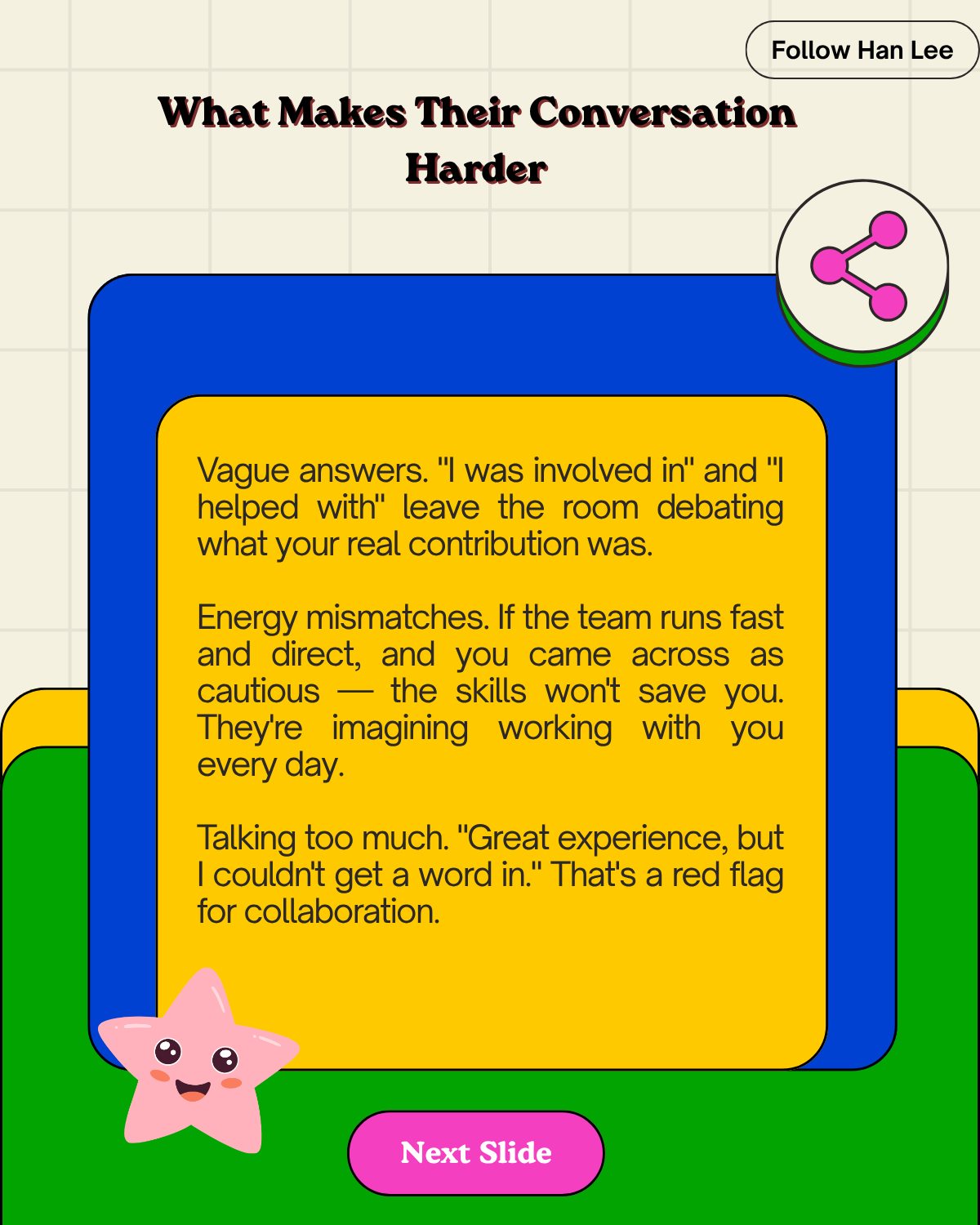
What makes their conversation harder
Vague answers. "I was involved in" and "I helped with" leave the room debating what your real contribution was.
Energy mismatches. If the team runs fast and direct, and you came across as cautious — the skills won't save you. They're imagining working with you every day.
Talking too much. "Great experience, but I couldn't get a word in." That's a red flag for collaboration.
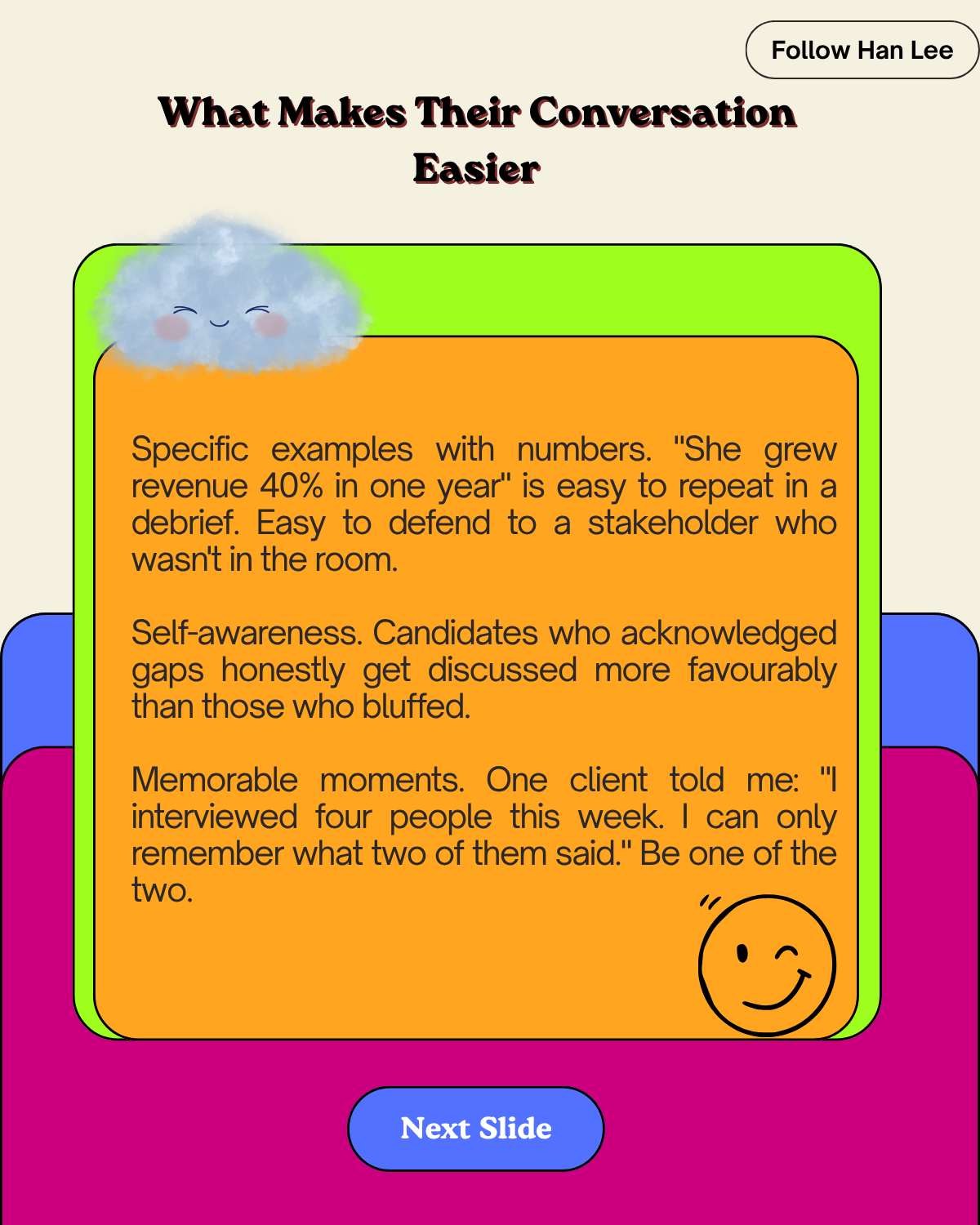
What makes their conversation easier
Specific examples with numbers. "She grew revenue 40% in one year" is easy to repeat in a debrief. Easy to defend to a stakeholder who wasn't in the room.
Self-awareness. Candidates who acknowledged gaps honestly get discussed more favourably than those who bluffed.
Memorable moments. One client told me: "I interviewed four people this week. I can only remember what two of them said." Be one of the two.
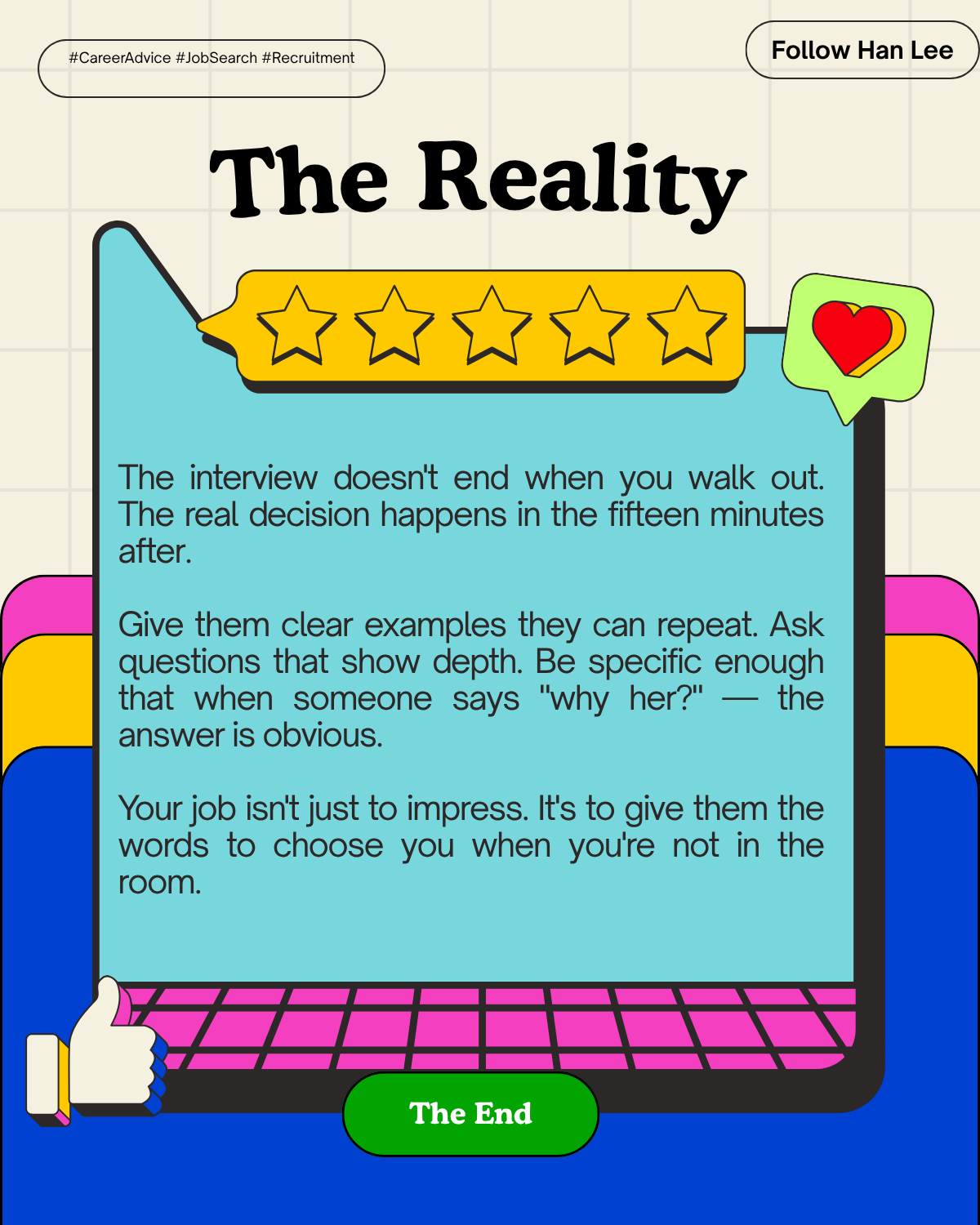
The reality
The interview doesn't end when you walk out. The real decision happens in the fifteen minutes after.
Give them clear examples they can repeat. Ask questions that show depth. Be specific enough that when someone says "why her?" — the answer is obvious.
Your job isn't just to impress. It's to give them the words to choose you when you're not in the room.